Personal Tax Information
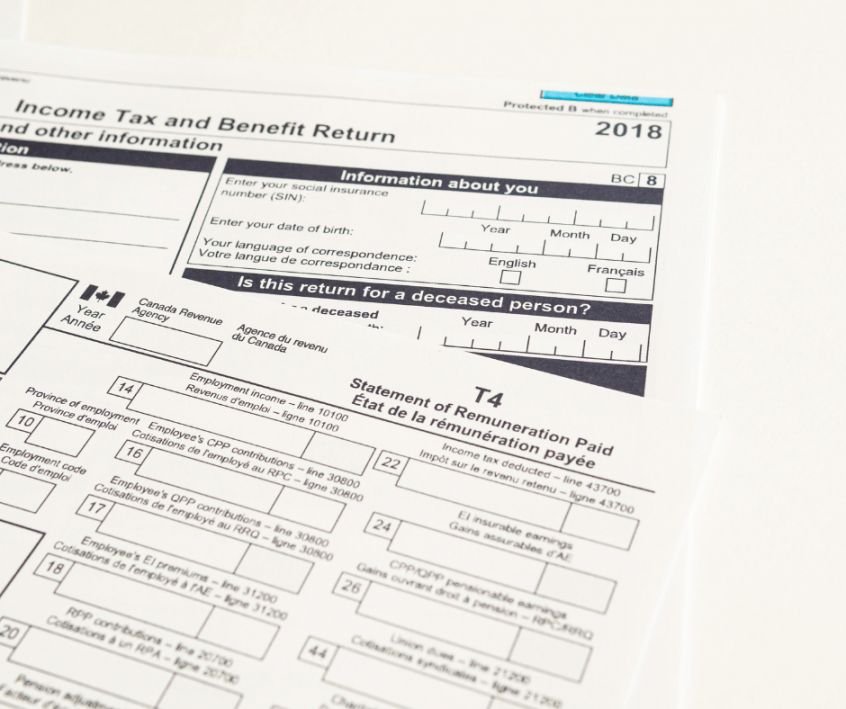
Personal Tax Checklist
For Existing Clients
If applicable, please bring the following documents to your appointment:
Income Slips
- T4, T4A, T4(P), T4A(OAS), T4E, T4(RSP), T3, T5, T5113, T5007
- Pension income not included on T4(P)
- Capital gains or loss summaries
- Stock trading statements for the year
- Rental income and expense details
- Investment income (interest and dividends)
- Any additional income not listed above
RRSP Contributions
- Official RRSP contribution receipts (CRA-issued — not brokerage summaries)
Deductions & Credits
- Charitable donation receipts
- Medical expense receipts, including private health insurance premiums
- Form T2200 signed by your employer (Available from the CRA website)
- Tuition and education slips (for you, your spouse, or dependents)
- Childcare expense receipts (including caregiver’s SIN)
- Union or professional dues
Other Important Documents
- Separation or divorce agreement (required for spousal support claims)
New Clients
- All applicable documents listed above
- A complete copy of your prior year’s tax return (if available)
- A list of any questions or concerns about your tax situation
MARITAL STATUS & TAX CONSIDERATIONS
Every individual in Canada must file their own tax return, regardless of age, if they have earned income. If you are married or in a common-law relationship, preparing returns together often provides planning advantages.

Key Planning Opportunities
- Childcare Expenses : Typically claimed by the lower-income spouse.
- Charitable Donations : Combining donations on one return may increase the tax credit.
- Medical Expenses : Usually more beneficial when claimed by one spouse.
- Tuition Transfers : Unused tuition credits may be transferred to a spouse or parent, subject to limits.
- Pension Income : Splitting Eligible pension income may be shared between spouses to reduce overall tax.
- Investment Income : Planning Certain strategies may allow income splitting, depending on circumstances.
SPOUSAL SUPPORT (ALIMONY)
Spousal support payments:
- Are tax-deductible for the payer.
- Are taxable income to the recipient.
- Must be monetary payments made directly to the former spouse.
- Must be outlined in a legal agreement or court order.
If the agreement specifies that payments are not taxable to the recipient, they are not deductible to the payer.
Payments cannot continue after the death of the recipient.
Spousal support must be clearly distinguished from child support.
Child Support
Child support payments:
- Are not deductible by the paying parent.
- Are not taxable income to the receiving parent.
Dependency Claims
The custodial parent generally claims eligible dependent credits unless they provide written permission for the other parent to do so.
Medical Expenses
Medical costs may be claimed by the parent who paid them, regardless of who claims the child as a dependent.
Legal Fees & Divorce Costs
- General divorce expenses are not tax-deductible.
- Legal fees related to property division may be added to the adjusted cost base of the property.
- Legal fees for obtaining spousal support or tax advice are generally not deductible.